


Have you ever switched cleansers hoping to calm dry, easily irritated skin, only to find yourself wondering whether the bar or the bottle was the problem? If your skin is sensitive or eczema-prone, there isn’t one format that works for everyone, and the best sensitive skin soap for you may not look the same as someone else’s. The ingredients, and your skin’s response to them, matter more than whether your cleanser is a bar or a body wash.
Here’s a clear, balanced way to compare them, so you can choose with care rather than guesswork.
Why Sensitive Skin Can React to a Cleanser
Cleansers use surfactants to lift away oil and dirt. Some formulas can also remove too much of the skin’s natural oils, leaving skin feeling tight, dry, or uncomfortable. Fragrance and essential oils may bother some people, and preservatives or botanical ingredients can also trigger individual sensitivities.
The formula matters, too. Traditional soap is alkaline, while skin’s surface is naturally slightly acidic. Frequent exposure to alkaline soap may temporarily affect the skin’s surface pH and contribute to dryness or irritation for some people. Research on skin cleansing generally favors mild, fragrance-free cleansers for dry or eczema-prone skin. You can read more in this Skin Cleansing without or with Compromise: Soaps and Syndets (Molecules, 2022) and the Pierre Fabre Eczema Foundation’s overview of soap and eczema.
“Natural” doesn’t automatically mean gentle, either. Your skin may respond well to a simple plant-oil bar, or react to a particular fragrance or essential oil. The most helpful guide is a thoughtful ingredient check, followed by noticing how your own skin feels.
What to Look for in Handmade Soap
A well-made handmade soap can feel creamy and comforting, with a soft lather that rinses clean. If you’re considering artisanal soap bars, look for a clear ingredient list and learn how they’re made.
Cold-process soap is made by combining oils with an alkali in a process called saponification. Glycerin is naturally formed during this process and can remain in the finished bar. Some makers also superfat their soap, meaning they use more oil than is needed for saponification. Those details may contribute to a pleasant, less dry-feeling wash for some people, but they don’t make traditional soap pH-neutral.
A good cure time matters, too: curing allows excess water to evaporate and the bar to become firmer and last longer. Ask the maker if the process or ingredients aren’t clear. If you’re sensitive to fragrance, choose a fragrance-free option and check whether essential oils are included; “unscented” and “fragrance-free” don’t always mean the same thing.
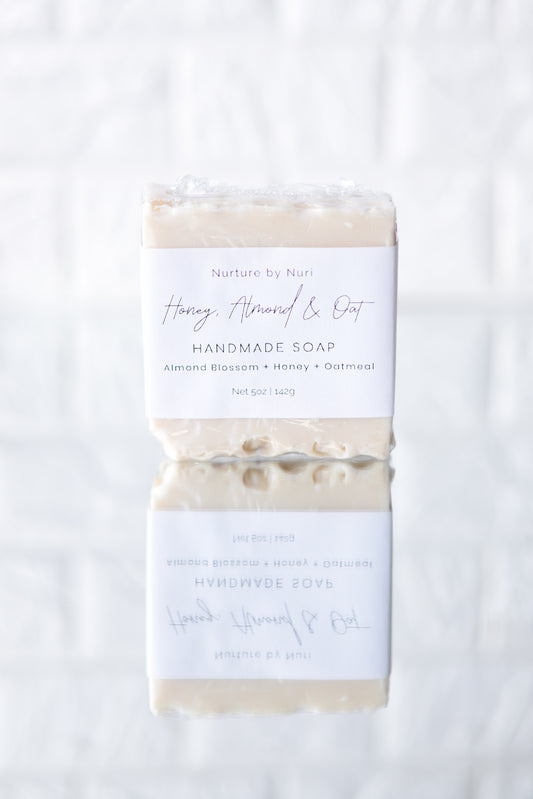
For a simple starting point, Nurture by Nuri’s Unscented Oatmeal Soap Bars are described as an option for sensitive skin and scent allergies. As with any new cleanser, check the full ingredient list against your known triggers. Explore the handmade soap collection to see available bars.
What to Look for in Body Wash
Body wash isn’t automatically harsh. Some liquid cleansers are made with mild surfactants, such as certain glucosides or isethionates, and formulated closer to skin’s natural pH. A fragrance-free, soap-free cleanser may be a comfortable choice for reactive skin.
Look for a short ingredient list and, when available, a product described as soap-free or a syndet cleanser. Syndets use synthetic detergents rather than traditional soap; they can come as liquids or bars. If you know sulfates bother your skin, choose a formula without them. Fragrance-free options may also be easier to assess than scented washes. Keep in mind that even ingredients often used in gentle formulas can bother an individual, so no ingredient list guarantees a perfect match.

Some body washes contain preservatives because water-based products need protection from contamination. That doesn’t automatically make them a poor choice. The goal is to find a formula your skin tolerates and use it as directed, not to avoid an entire product category.
The pH Question, Simply Explained
The pH scale measures how acidic or alkaline something is. Skin’s surface is mildly acidic, while traditional soap is usually alkaline. A syndet cleanser can be formulated closer to skin’s natural pH, which is one reason it may suit some people with sensitive or eczema-prone skin.
Here’s the honest part: glycerin and superfatting can affect how a true soap bar feels, but they don’t necessarily change its alkaline character. A rich lather or a handmade label isn’t proof that a bar will suit every sensitive-skin type. If pH matters to you, look for a cleanser whose pH is stated by the maker rather than assuming from its format.
A Gentle Decision Guide for Your Skin
If your skin is actively flaring, keep cleansing simple. Consider a fragrance-free, mild syndet or an emollient wash recommended for your skin, and avoid scrubs, fragrance, and hot water. Guidance from the National Eczema Society also discusses emollient wash products for people with eczema. Follow your clinician’s advice if you have a care plan.
If your skin is calm and you’re curious about a bar, you can try a straightforward handmade soap if its ingredients suit you. Some people enjoy the creamy feel and the simplicity of a bar; others find even a carefully made traditional soap drying. A bar may be a good fit if your skin tolerates it and you want a solid cleanser with a simple ingredient list. Don’t keep using it if you notice persistent tightness, stinging, redness, or itching.
For your face, be especially thoughtful. Facial skin can be more reactive, so a cleanser made for the face may be a better starting point than a body bar.
If you have hard water, pay attention to how your skin feels after rinsing. Minerals in hard water can react with traditional soap and leave residue that some people find unpleasant or drying. If that seems to be happening, a syndet cleanser may be worth trying.
How to Test a New Cleanser
Try one new product at a time. Use it as directed on a small area of your body, rinse thoroughly, and notice how your skin feels afterward and over the next day or two. Don’t test a new cleanser on broken or actively inflamed skin. Stop if it causes a reaction. This kind of cautious trial isn’t a substitute for professional allergy testing or medical advice.
Help Your Handmade Bar Stay Fresh and Last Longer
A little care can make a handmade soap bar last beautifully. Let it drain and dry between uses on a well-draining dish, rather than sitting in a puddle. Keep it out of the direct shower stream when you’re not using it. If you share a bathroom, using individual bars can feel more comfortable and helps each bar dry between washes.
So, Which One Should You Choose?
Neither handmade soap nor body wash is universally gentler. For actively reactive or eczema-prone skin, a fragrance-free, mild syndet or clinician-recommended wash can be a sensible first choice. If your skin is calm and you prefer a bar, a simple, fragrance-free handmade soap may suit you, and in some cases that may be the sensitive skin soap that feels most comfortable for you, just remember that a traditional soap bar is still alkaline, even when it’s rich in glycerin or superfat.
At Nurture by Nuri, we make handmade body care with sensitive and eczema-prone customers in mind, including an unscented oatmeal soap option. We aren’t doctors, and no cleanser can promise the same experience for everyone. If you have a skin condition, check with your dermatologist before changing your care routine.
After cleansing, a moisturizer that your skin already tolerates can help complete your body-care routine. If you’re exploring handmade whipped body butter, look closely at ingredients and consider an unscented option if fragrance is a concern. A luxurious product is a worthwhile investment when it truly suits your skin, and while terms like organic body butter, luxury organic skincare, vegan and cruelty-free, and responsibly sourced can be helpful signs, the formula itself still matters more than the label.
Your skin deserves patience, thoughtful choices, and care that feels comfortable. Listen to what it’s telling you, and let that guide your next gentle cleanse.
